New Youth Football Coaches
Author: Coach Kyle | Created: June 26, 2025
What Matters Most in Youth Football
The priorities, relationships, and mindset that define great youth coaches — before you ever blow a whistle.

If I could offer one piece of advice to a new youth football coach—or explain to a parent what I believe this game is really about—it's this: focus on teaching the right things, for the right reasons.
Start with the fundamentals. Not just of football, but of effort, responsibility, and respect. Teach kids how to line up, how to move their feet, how to block and tackle safely. Don't worry about being creative with formations or coming up with advanced passing concepts. That stuff has its place, but it's not the foundation. If your players understand leverage, space, and timing—and why those things matter—you're doing your job.
Keep your communication clear and your energy consistent. Kids don't need complexity, they need clarity. They should know exactly what's being asked of them, and they should feel like you believe they can do it. Your energy sets the tone. Show up with purpose and they will too.
That said, coaching is also about learning. If you're new to the game or just want to keep growing, take time to educate yourself on the basics of formations, schemes, and concepts. On this site, you'll find breakdowns and tools to help make that side of the game more approachable—so when you're ready to add more layers, you're doing it with intention.
At the same time, don't lose sight of the joy. Make it fun. Let their personalities come out. Compete hard, but laugh with them. Cheer the effort plays. Let them run a trick play in practice just for the thrill of it. The more they love the game, the more they'll want to keep learning and growing.
And maybe most important—build relationships. Every kid on your team deserves to feel seen and supported. The starter and the backup, the quiet kid and the loud one. Take the time to know them. Connect with them. Because once they trust you, they'll listen to you. And once they know you care, they'll give you everything they've got.
You're not just coaching football. You're helping shape who these kids become. That's the real job. And it's worth doing well.
How to Run Practice
A structured, high-energy practice template — organized enough to teach, loose enough to keep players coming back.

A great practice is structured, intentional, and full of energy. The best youth football practices balance teaching, repetition, and fun. Kids should leave tired but confident—feeling like they got better and had a good time doing it.
1. Start with Purpose
Every practice should have a plan. You should know exactly what you're trying to teach that day—whether it's installing Power, working tackling fundamentals, or building timing in the passing game. Write it down. Script it. The more organized you are, the smoother it runs.
2. Warm-Up & Dynamic Stretch (5–10 min)
- Focus on getting their bodies moving: high knees, lunges, skips, shuffles, backpedals, and sprints.
- Keep it fast-paced—avoid long static stretches.
- Use this time to set the tone and energy for the day.
3. Individual Periods (15–20 min)
Break into position groups. Each coach works with their group on skills that directly connect to that day's install.
- QB: Footwork, dropbacks, mesh points, throwing on rhythm.
- RB: Hand-offs, aiming points, pass protection, ball security.
- WR: Releases, route technique, blocking leverage.
- OL: Steps, double teams, communication, blocking schemes.
During install days, your individual drills should directly tie into that day's play—for example, "Power run" or "Flood passing concept."
4. Group/Combined Period (10–15 min)
Pair position groups together to start connecting the play:
- OL + RBs: Work run fits and blocking assignments for the day's run concept.
- QBs + WRs: Rehearse timing, spacing, and progression for the day's passing concept.
This helps players understand how their assignments fit into the bigger picture before you go to full team reps.
5. Team Offense / Team Defense (20–25 min)
Bring everyone together to run full plays at team tempo. This is where you install, correct, and reinforce execution.
- Keep it fast-moving but controlled.
- Coach on the run—don't stop every rep.
- Emphasize effort, alignment, and communication.
6. Competition & Fun Period (10 min)
End every practice with something competitive and fun—relay races, goal line challenges, or best-catch contests. Let them compete and laugh. That's what keeps kids coming back.
7. Team Talk & Wrap-Up (5 min)
Always end together as a team. Reinforce effort, sportsmanship, and the day's teaching points. Highlight great effort or leadership moments. End on a positive note that builds your culture.
Remember: Consistency and structure beat complexity. Kids thrive when they know what to expect, can see progress, and feel like they belong. Make your practices organized, upbeat, and focused—and you'll build something that lasts.
Remember 2: Just like layering an offense play sequence, you can layer your practices. Our organization allows us to have three months of offseason practices. With a new team, we spend the first month running position and circuit drills to identify each player's natural strengths. During the second month, as we begin to determine where players will fit best, we focus on teaching technique and executing drills against air. In the third and final month before the season begins, we introduce 1-on-1 competitions and allow players to start applying those skills against live opponents. By layering our practices, we continually build on previous lessons while gradually increasing the difficulty and level of competition.
How to Think About Installing Your Offense
The most common mistake new coaches make isn't picking the wrong plays — it's installing too many of them.

It's tempting to build your playbook the way you build a fantasy roster—grab everything that looks good. But youth football doesn't reward volume. It rewards execution. A team that runs five plays extremely well will beat a team that runs twenty plays average, every time. Before you install a single play, think through these steps in order.
"Awful skinny playbook ain't it?" Coach Bill Yoast asks after Coach Herman Boone hands him a small booklet. "I run six plays, split veer. It's like Novocain. Just give it time, always works." — Remember the Titans
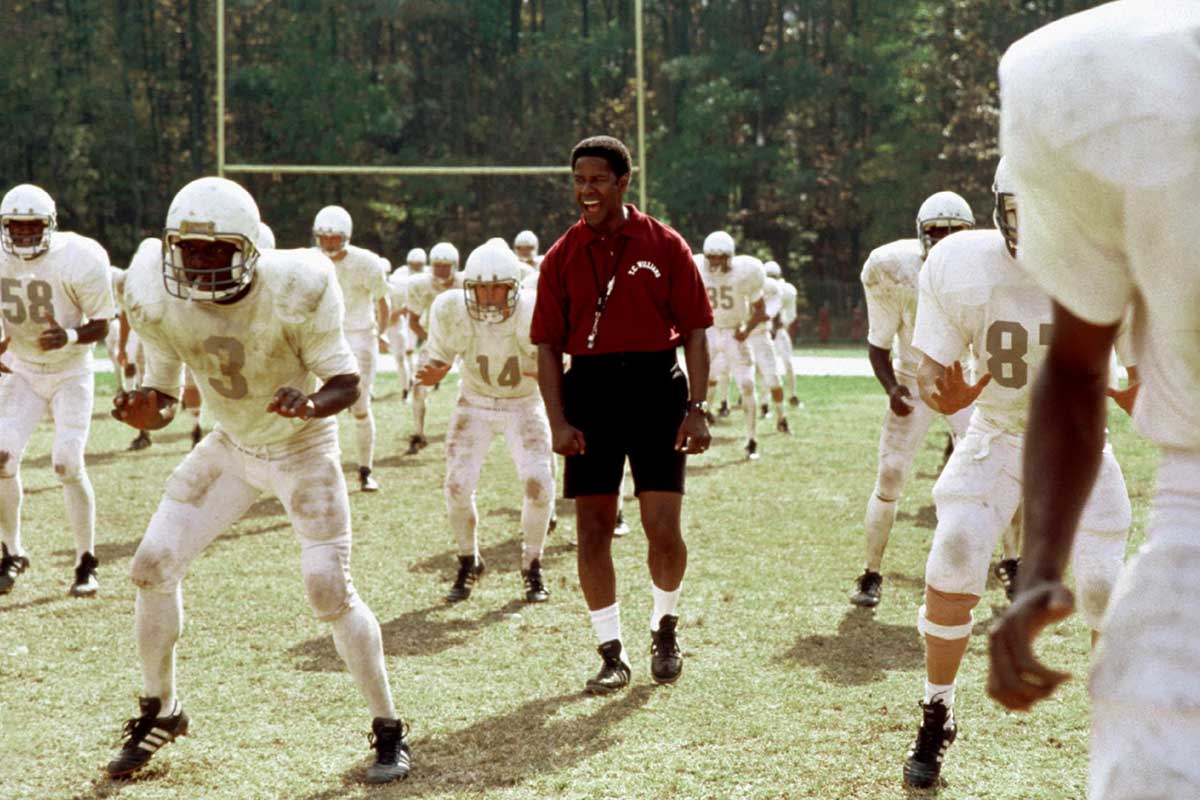
It's easy to get ahead of yourself as a head coach, offensive coordinator, or play caller. We watch the NFL, college, even high school football, and we're exposed to every play and every exotic concept imaginable. At this level, we don't need all that. Pick a simple run concept—Inside Zone, Outside Zone, Power, Counter, or Duo—and pair it with a couple of passing plays that complement it.
1. Start With Your Run Game
Every offense should begin with a run game identity. Before you draw up a single play, decide what kind of run team you want to be:
- Do you want to be a Zone team?
- Do you want to be a Gap team?
- Do you want to run a Man/Power-based blocking scheme?
There isn't one "correct" answer here. Zone, Gap, and Man/Power schemes have all won championships at every level of football. The best system isn't the one that looks best on paper—it's the one your coaches can teach confidently and your players can execute consistently. Pick one. Commit to it.
2. Identify Your Talent Before You Build Around It
I've been on teams where the coaches built out the entire playbook before we even had a good feel for our own talent. Heck, I've done it myself as a head coach. That's exactly why I hammer this point so hard: identify a small handful of plays that, regardless of who ends up on the field, your team should be able to run. Get those installed and working first. Then adapt around the specific players you have.
Example: I once had a QB who was outstanding rolling out to his right—he could turn the corner and throw strikes to receivers running corner routes, and he had no trouble delivering tunnel and bubble screens in that direction. But ask him to throw from the pocket, or roll left, and it fell apart. When he had to flip his hips, the accuracy and confidence just weren't there. Knowing that shaped what we installed: rollout passes and bubble screens to his right became a priority from day one, not something we stumbled onto midseason.
That's what I mean by identifying the talent on your team—know your players, have a clear idea of what you as a coach want to run, and build around that as the season progresses.
3. Master a Small Number of Plays
Once you've picked your identity, resist the urge to install everything that goes with it. Success comes from executing a few plays extremely well, not from carrying a large playbook. Choose your core run plays and get great at them before you add anything else. Your players should be able to run your base plays in their sleep before you ever introduce a counter, a wrinkle, or a new formation.
4. Add One Complementary Passing Concept
Once your base run game is installed, choose one passing concept that complements it—a simple, high-percentage concept your players can learn quickly. A few examples:
- Flood
- Smash
- Stick
- Mesh
- Quick Out concepts
The exact concept you choose matters far less than how well you teach it. A simple pass concept your players execute with confidence beats an advanced one they hesitate on.
5. Layer Your Offense
After your team is comfortable with the base run and your first passing concept, start layering the offense. This is where you begin building answers off of what already works:
- Counters off your base run
- Play-action off your best run
- Motion that creates the same look with different responsibilities
- Tags and formations that make existing plays more difficult to defend
Every new play you add should build upon something your players already know—the same footwork, the same landmarks, the same rules. That's what makes it a layer instead of a whole new install. See Building a Layered Offense below for a deeper look at how this works in practice.
6. Let Your Opponent Influence Weekly Installs
As the season progresses and game film becomes available, you can start tailoring a small part of your game plan to your opponent. Each week, work through:
- Identifying the opponent's front
- Recognizing their common coverages
- Determining whether your base runs still attack their defensive structure effectively
- Installing one or two additional passing concepts during the week that exploit what you see on film
These weekly installs are additions to your existing offense, not a complete overhaul. Your identity and your core plays stay the same—you're just adding a targeted wrinkle or two to take advantage of what a specific opponent gives you.
7. Reinforce the Philosophy
If you take one thing from this page, make it this:
Great youth football offenses aren't built by installing dozens of plays. They're built by mastering a few core concepts, then layering complementary plays as players gain confidence and understanding.
- Pick one run identity — Zone, Gap, or Man/Power — and commit to it
- Know your players' strengths before you build the install sheet
- Master a small number of core plays before adding more
- Add one passing concept that complements your run game
- Layer in counters, play-action, and motion off what already works
- Let game film drive small weekly additions, not a new playbook
Building a Layered Offense
Run fewer concepts. Execute them better. Add answers that look identical to what already works — until defenses can't commit to stopping any of them.
The best offenses don't run more plays — they run fewer plays better. A layered offense is built around a small number of core concepts where every new addition grows from something players already know. Players experience simplicity. Defenses experience complexity.
What Is a Layered Offense?
A layered offense is built around a small number of core concepts that work together. Each new addition builds on what already exists — same look, same footwork, same blocking rules — with a different answer at the end. Instead of installing a new play, you're adding a new chapter to a story your players already know.
Each concept builds from the one before it — same look for the defense, new answer for the offense.
Horizontal Growth vs. Vertical Layering
Most playbooks grow horizontally — adding more plays when something doesn't work. Layered offenses grow vertically, adding answers that look identical to what already works.
Horizontal Growth
- Install a new run concept
- Install a new pass concept
- Add a new formation
- Add a new motion
Each addition requires its own teaching block, new assignments, and separate timing reps. Across a youth roster with limited practice time, this creates information overload — players who forget under pressure.
Creates confusionVertical Layering
- New answers grow from existing concepts
- Defense sees the same pre-snap picture
- Players run familiar footwork and assignments
- Multiple answers emerge from one look
Players only learn what's different — not everything from scratch. Defenses can't commit because they've already seen this same look mean something else.
Builds masteryThe Parker Hawks Example
Our offensive system isn't about running everything. It's about becoming excellent at a small number of complementary concepts — and making each one harder to stop because of the others.
- Inside Zone
- Outside Zone
- Boot
- Flood
- Whip
- Smash
- Dagger
The goal isn't to run all of these in every game. The goal is to know each one well enough that players execute under pressure — and that each concept makes the others harder to defend.
Build Off What Already Works
When a concept is succeeding, resist the urge to install five new things. Instead, look for the natural extensions — variations that use the same framework but present a new problem to the defense.
Whip Family
- Whip
- Whip & Go
- Whip + Corner
Out Route Family
- Out
- Out & Up
- Smash
- Flood
Running Back Family
- Swing
- Swing Screen
- Angle Route
- Check Release
Each family starts with the simplest version of the concept. As players master the root, the variations install faster because the foundation is already there.
The Coaching Test
"When adding a new concept, ask: Does this look like something we already do?"
It may be a natural layer. Players recognize the framework and only need to learn what's different — a much shorter teaching loop.
Be cautious — especially in youth football. A concept that doesn't connect to your system adds a full teaching load with limited practice time to absorb it.
Playbooks Grow Horizontally.
Layered Offenses Grow Vertically.
- Fewer concepts to install and maintain all season
- More mastery through repetition and recognition
- More built-in answers to defensive adjustments
- Faster player development — they understand the why
- Harder for defenses to prepare for your look